How to ship shoes and sneakers without crushing the box
Shoebox sizes and the shipping box that fits around each one, the double-box method sneaker buyers expect, and how to keep a big, light box from getting billed like a heavy one.
- Never put the label on the shoebox. Put the shoebox inside a bigger shipping box. Sneaker buyers treat the shoebox as part of what they paid for.
- Pick an outer box about 2 inches bigger than the shoebox each way. A typical men's sneaker box fits in a 16 x 12 x 7 inch box.
- Stuff the toes, fill every gap, and keep tape off the shoebox itself.
- Stay under one cubic foot (1,728 cubic inches) when you can. Bigger USPS boxes get billed by size, not weight.
Shoes are one of the biggest categories for resellers on eBay, Poshmark, Depop, and Mercari, and they're also one of the easiest to ship badly. Most damage complaints aren't about the shoes. They're about the shoebox: a crushed corner, a torn lid, or a shipping label slapped right on the side. For new or collectible sneakers, buyers grade the box too, and a beat-up box can mean a return or a price drop.
The fix is the double box, a shoebox inside a slightly bigger shipping box. Here's how to size it, pack it, and keep the postage down.
Shoebox sizes and the shipping box to use
Shoebox sizes vary by brand, style, and shoe size, so treat these as a starting point and measure the box you're shipping.
| What you're shipping | Approx. shoebox size | Outer shipping box to look for |
|---|---|---|
| Kids' shoes | About 9 x 6 x 4 in | 11 x 8 x 6 in. Small enough to stay cheap. |
| Women's sneakers | About 12 x 8 x 4.5 in | 14 x 10 x 6 in. |
| Men's sneakers | About 13.5 x 9.5 x 5 in | 16 x 12 x 7 in. About 1,344 cubic inches, under one cubic foot. |
| Men's size 13+ or high-tops | About 14.5 x 10.5 x 5.5 in | 17 x 12 x 8 in. Still just under one cubic foot. |
| Ankle boots | About 14 x 10 x 5.5 in | 16 x 12 x 8 in. |
| Tall boots | About 18 x 14 x 5 in or bigger | Measure and add 2 inches. These usually go over one cubic foot, so compare carriers before you buy the label. |
Got the shoebox size? Plug it into the BoxSizeFit calculator and it will find the smallest standard box that fits around it.
How to double-box sneakers
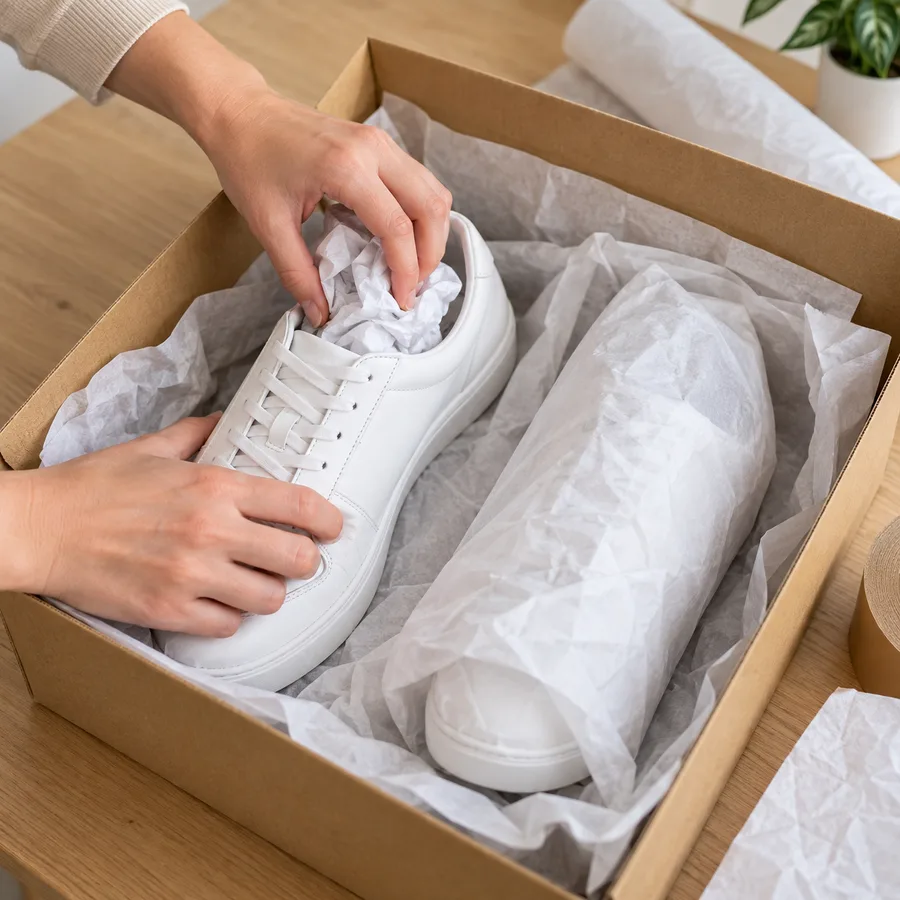
Step 1. Stuff the toes and wrap each shoe in tissue.
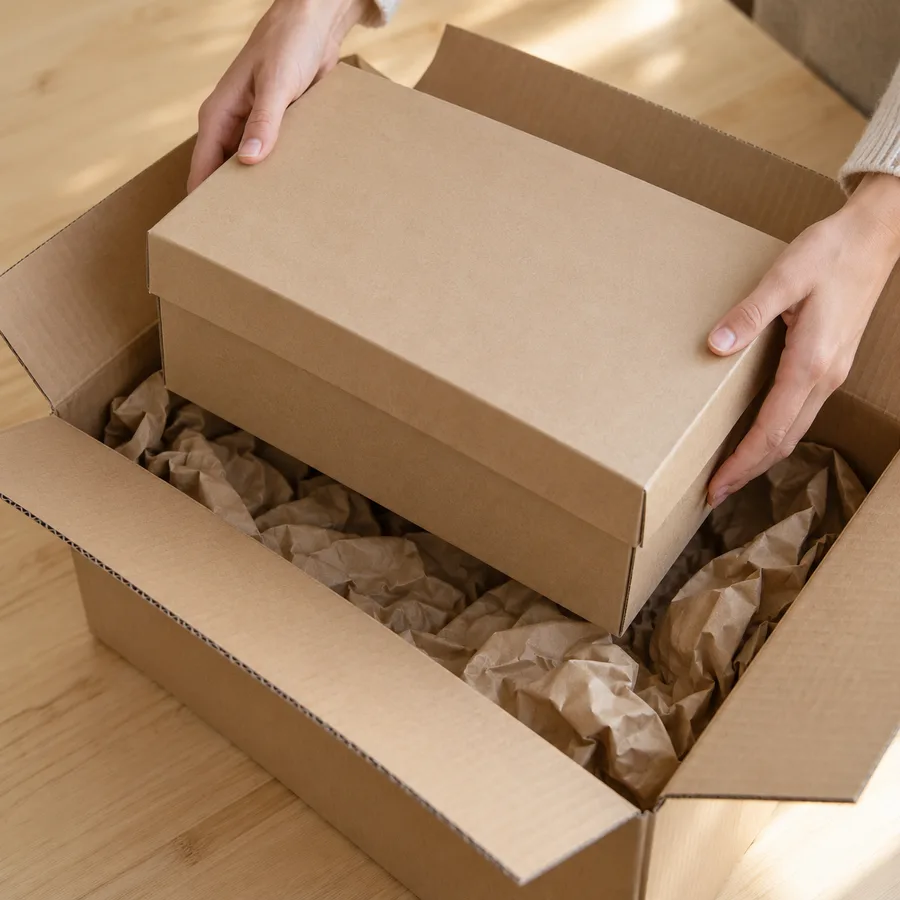
Step 2. Set the closed shoebox on padding in a bigger box.
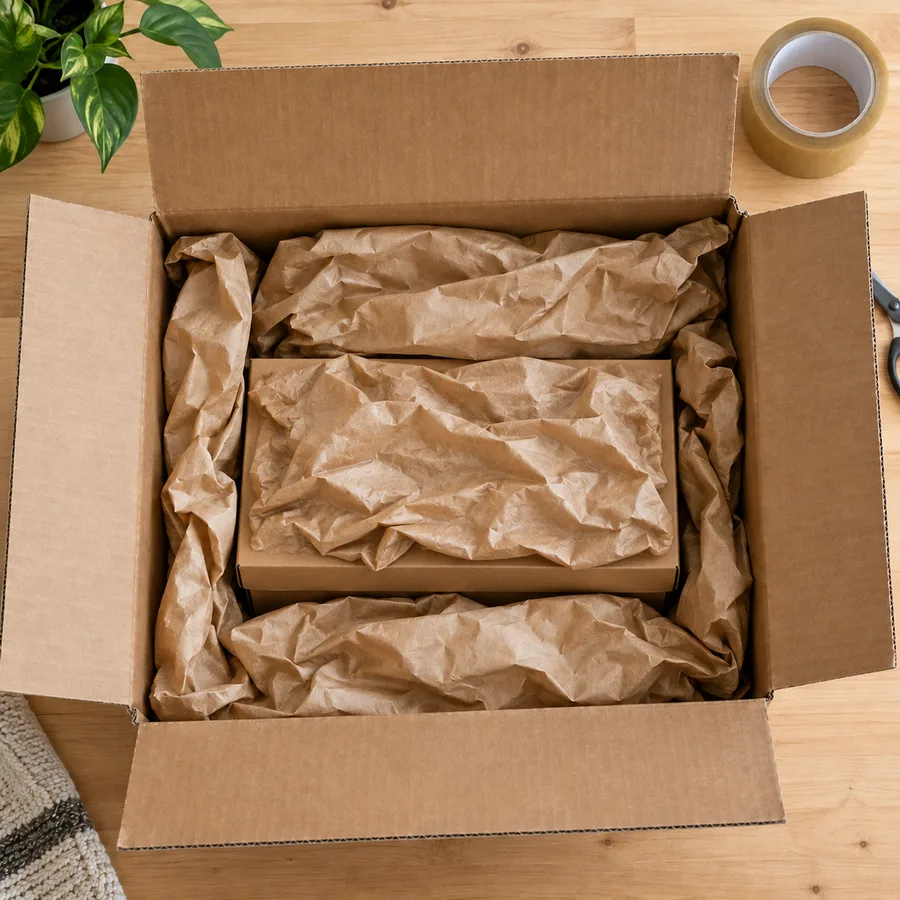
Step 3. Fill every side and the top, then tape the outer box only.
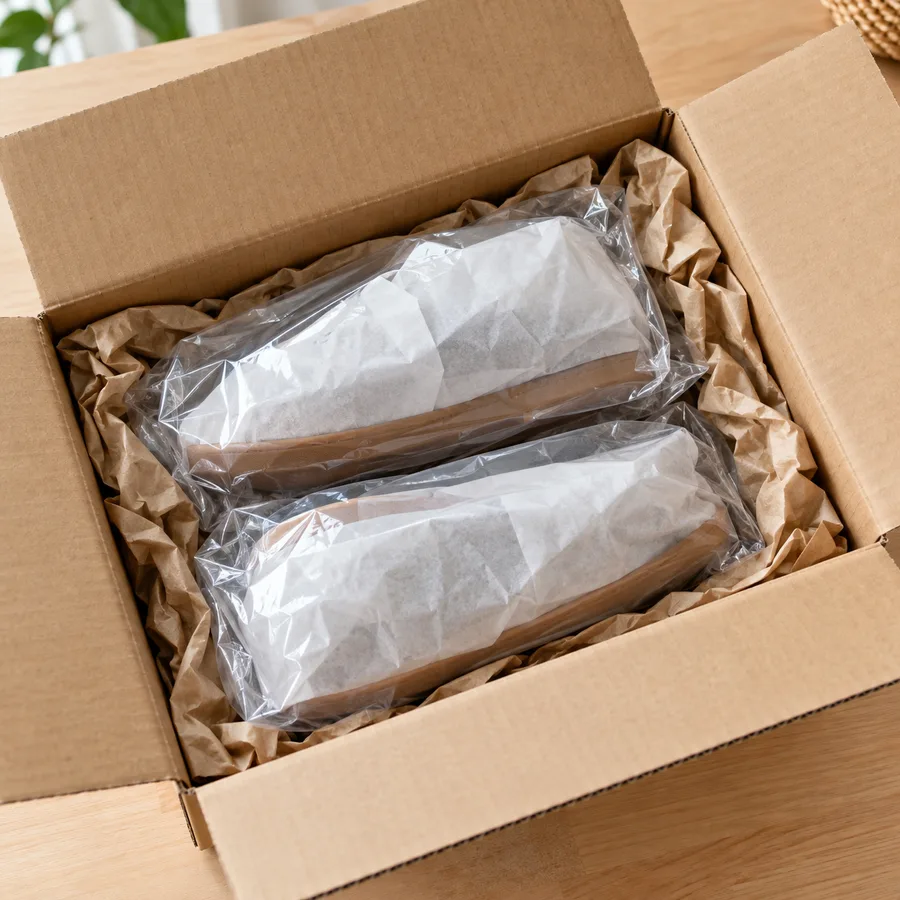
Step 4. No shoebox? Wrap each shoe, bag it, and use a snug box.
- 1The shoebox, lid on, no tape, no label. For new sneakers, buyers expect it to arrive like it came off the shelf.
- 2Padding on every side, about an inch. Crumpled paper or air pillows both work.
- 3An outer box about 2 inches bigger than the shoebox each way. This box takes the label, the tape, and the knocks.
- Clean and photograph the shoes. Wipe the soles, then take photos of both shoes and all sides of the shoebox. If a buyer opens a damage claim, you'll have proof of how it left your hands.
- Stuff the toes. Crumpled paper or the original paper stuffing keeps the toe box from creasing. Leave any original shoe trees or tissue in place.
- Wrap the shoes and close the shoebox. A sheet of tissue between the two shoes stops them scuffing each other. Put the lid on, with no tape on the shoebox.
- Pad the bottom of the outer box, then set the shoebox in the middle.
- Fill the sides and top. The shoebox shouldn't touch any wall of the outer box. Close the flaps and shake gently. If anything moves, add more fill.
- Tape and label the outer box only. Tape the top and bottom seams with an H pattern, and put the label on the largest flat side.
Reusing a box? Cover or cut off any old hazmat markings, like the black-and-white diamond from a cosmetics or aerosol shipment. Since July 2026, USPS can charge a $50 noncompliance fee on packages with hazmat markings that don't match what's inside.
Shipping shoes without a shoebox
Pre-owned shoes often don't come with their box, and that's fine as long as you still use a box to ship them. Stuff the toes, wrap each shoe in paper, and put each one in its own plastic bag so dirt from the soles doesn't rub onto the uppers. Pack them heel to toe in a snug box with padding around them.
Soft, crush-proof shoes like slippers, flip-flops, and slides can go in a poly mailer. Anything with structure, like sneakers, boots, heels, and dress shoes, should go in a box, since a mailer lets the toe box and heel cave in.
Boots and tall boots
Boots are where shipping costs jump. Put a rolled-up magazine or a tube of paper inside each shaft so it stands up and doesn't crease, then pack them like any other shoe. Tall boot boxes almost always go over one cubic foot, so compare USPS Ground Advantage against UPS and FedEx ground before you buy the label.
Cheapest way to ship shoes
Shoes are big and light, so the size of your outer box matters as much as the weight. USPS bills boxes over one cubic foot (1,728 cubic inches) by dimensional weight, and since July 2026 it divides by 139 to get that number. An 18 x 14 x 8 inch box works out to about 2,016 cubic inches, which bills like a 15 pound package even if your sneakers weigh 3. A snug 16 x 12 x 7 box is under the line and gets charged by its real weight.
For most pairs in the right-sized box, USPS Ground Advantage is the best value. If you're selling on Poshmark, the prepaid label is priced in weight tiers, so weigh boots and big lots before you ship and upgrade the label if you need to. If an expensive pair on eBay goes through Authenticity Guarantee, pack it the same way. It still has to survive the trip to the authenticator.
Want the full picture on size-based pricing? See Priority Mail Cubic pricing.
Common shoe shipping mistakes
- Labeling the shoebox. It tears the box art when the buyer peels it off, and the box is part of what collectors pay for.
- An outer box that's way too big. The shoebox slides around, and anything over one cubic foot can cost a lot more with USPS.
- Taping the shoebox lid down. Same problem as a label. Let the outer box hold it closed.
- Skipping toe stuffing. Toe boxes crease in transit, especially on leather and suede.
- Dirty soles. A buyer opening a box of dirt doesn't leave good feedback.
Supplies checklist
- 16 x 12 x 7 inch shipping boxes for men's sneakers
- 14 x 10 x 6 inch boxes for women's and smaller shoes
- Packing paper or air pillows
- Tissue paper
- Plastic bags for unboxed shoes
- Packing tape
Not sure which mailer or box it fits in? Measure your packed item and drop the numbers into the free BoxSizeFit calculator. It matches you to the smallest USPS, UPS, or FedEx box or bubble mailer that fits, for eBay, Etsy, Poshmark, and Depop.
Open the box size calculatorFrequently asked questions
What size box do I need to ship shoes?
Measure the shoebox and add about 2 inches to each side. A typical men's sneaker box is around 13.5 x 9.5 x 5 inches, so a 16 x 12 x 7 inch shipping box fits it with room for padding. Women's and kids' shoeboxes are smaller, and boots usually need bigger boxes.
Can I ship shoes in just the shoebox?
You can, but it's a bad idea for anything you want to arrive looking good. The shoebox gets dented and covered in labels and tape, and many sneaker buyers count a damaged box as a damaged item. Put the shoebox inside a shipping box instead.
What does double boxing sneakers mean?
It means putting the shoebox, with the shoes inside, into a second, larger shipping box with padding around it. The shipping label and tape go on the outer box, so the shoebox arrives clean.
How do I ship shoes without a box?
Stuff the toes with paper, wrap each shoe in paper or tissue, put each one in a plastic bag, and pack them in a snug shipping box with padding. Soft shoes like slippers or flip-flops can go in a poly mailer, but structured shoes and sneakers should go in a box.
Why did shipping my shoes cost so much?
Big, light boxes can be billed by size instead of weight. With USPS, that kicks in once a box is over one cubic foot (1,728 cubic inches). Using an outer box just a couple of inches bigger than the shoebox usually keeps you under that line.